

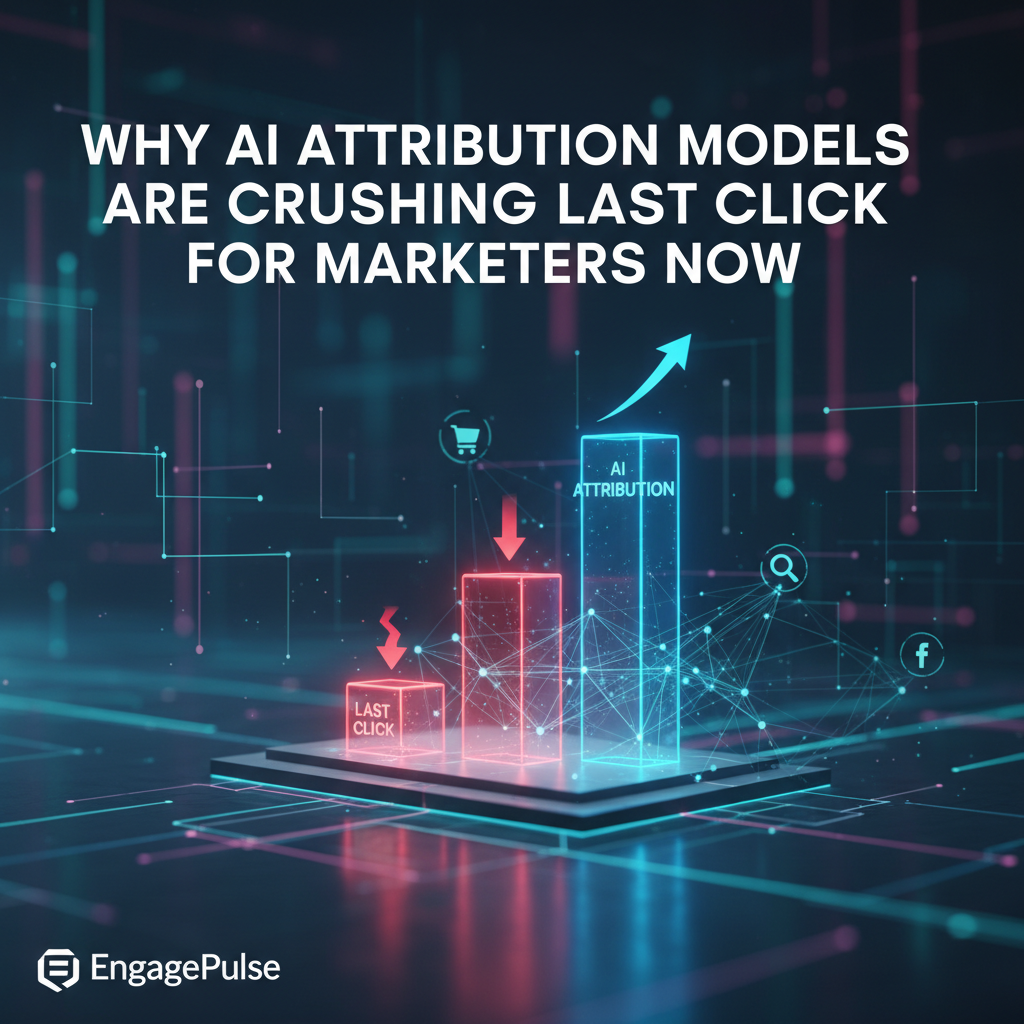
The Limitations of Last-Click Attribution in an AI-Driven Marketing World
As marketing technology advances with AI integrations, traditional attribution models like last-click attribution are increasingly proving their limitations. This post explores why relying solely on last-click data can misguide enterprise marketing strategies and how new approaches can better reflect the customer journey in an AI-first landscape.
Understanding Last-Click Attribution and Its Shortcomings
Last-click attribution assigns all credit for a conversion to the final touchpoint before a sale. While simple and widely adopted, this model oversimplifies complex customer journeys, especially in an era where multiple channels—social media, email campaigns, webinars—interact seamlessly. For enterprise brands executing multi-channel strategies, last-click often undervalues earlier touchpoints that contribute to conversion.
The Shift to Multi-Touch and AI-Driven Attribution Models
Recent developments, such as those discussed on Martech.org, emphasize the importance of multi-touch attribution (MTA) models that assign weight across various customer interactions. Leveraging AI enables capturing and analyzing massive datasets to identify the influence of each touchpoint more accurately. AI-powered attribution models dynamically adjust weights based on user behavior, cross-channel interactions, and predictive analytics, providing a comprehensive view that traditional models lack.
Implications for Enterprise Marketers
For enterprise businesses utilizing platforms like Marketo, HubSpot, or Salesforce, incorporating AI-driven multi-touch attribution can significantly optimize marketing spend. These tools can automatically analyze customer data, prioritize the most effective channels, and forecast future trends, leading to smarter budget allocation and personalized engagement strategies. For example, Salesforce Einstein AI can analyze customer interactions across multiple channels and suggest the most impactful touchpoints to focus marketing efforts.
Practical Example: Enhancing Campaign Effectiveness with Salesforce Einstein
Imagine an enterprise B2B SaaS company running multiple campaigns across LinkedIn, webinars, email marketing, and content downloads. Using Salesforce Einstein’s AI-driven attribution, the marketing team can identify which touchpoints contributed most to high-value conversions. The platform assigns credit dynamically, helping marketers optimize ROI by reallocating resources to the channels with the highest influence.
Step-by-Step Tutorial: Setting Up AI-Driven Attribution in Salesforce
- Log into your Salesforce Marketing Cloud account and navigate to the Einstein Attribution dashboard.
- Link your customer engagement data sources—email, web visits, social media interactions, and CRM data.
- Configure your conversion goals and select the multi-touch attribution model—such as Shapley or Markov Chain—available within Einstein Analytics.
- Allow the AI to process historical data to establish influence patterns across channels.
- Review the attribution report to identify which touchpoints have the highest impact on conversions.
- Adjust your marketing campaigns and budget allocations based on insights—focusing more on high-impact channels.
Conclusion
Transitioning from last-click to AI-driven multi-touch attribution is critical for enterprise marketers seeking accurate insights into their customer journeys. Leveraging platforms like Salesforce Einstein enhances strategic decisions, delivering personalized experiences and maximizing marketing ROI. As AI continues to evolve, adopting sophisticated attribution models will be essential in staying competitive in an increasingly complex marketing landscape.

Leave a Reply