

Unlocking the Power of Comprehensive Metrics in Performance Marketing
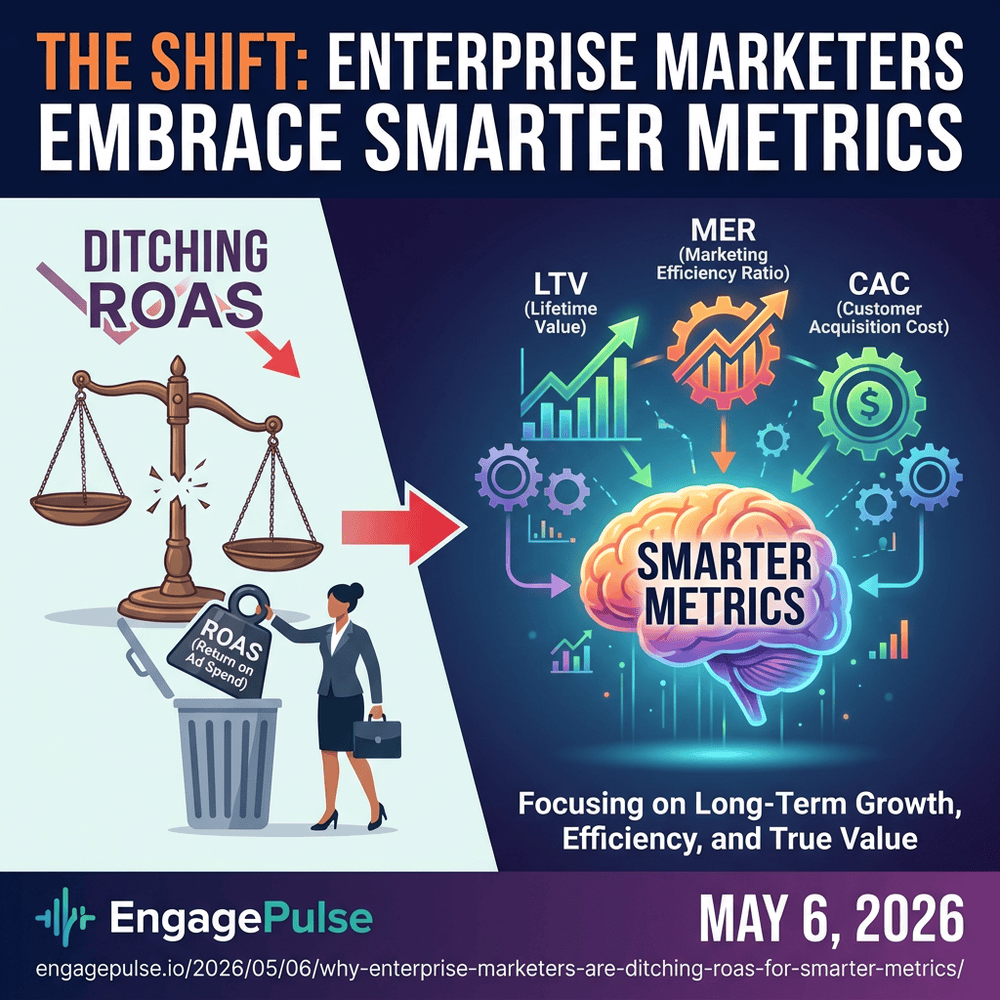
In the rapidly evolving landscape of digital marketing, focusing solely on ROAS (Return on Ad Spend) can limit strategic insights. Recent industry discussions highlight the importance of integrating more holistic performance metrics that encapsulate user engagement, customer lifetime value, and brand affinity. This approach enables enterprise marketers to craft more effective, data-driven campaigns that foster sustainable growth.
The Limitations of ROAS in Performance Marketing
ROAS has traditionally served as a vital KPI, offering a straightforward measure of campaign profitability. However, it often fails to account for the complexities of customer journeys, particularly in B2B enterprise contexts. For example, a high ROAS might overlook long-term customer retention or the cumulative value generated by multi-touchpoint engagement. As highlighted by Martech.org, ROI metrics need to evolve into comprehensive performance indicators that reflect the full customer lifecycle.
Expanding Metrics for Deeper Insights
To address these limitations, marketers are increasingly adopting metrics such as Customer Lifetime Value (CLV), Engagement Score, and Brand Advocacy Levels. These indicators provide a nuanced view of campaign success, revealing how individual interactions contribute to overall business health. For instance, tracking post-conversion behaviors helps in understanding long-term customer satisfaction and potential referral opportunities.
Implementing the Strategy with CRM Platforms
Platforms like Salesforce, HubSpot, and Marketo are pivotal in capturing and analyzing these broader metrics. They enable automation workflows that segment audiences based on engagement patterns and predict future behaviors, enhancing personalization. For enterprise marketers, leveraging these tools can mean the difference between a transactional campaign and a comprehensive, lifecycle-oriented strategy.
Case Study and Practical Tutorial
Consider an enterprise SaaS company aiming to boost customer retention. Using Salesforce, marketers can set up custom dashboards that track engagement scores, renewal rates, and CLV. For example, integrating Salesforce Automation rules with lead scoring models can automatically nurture highly engaged prospects. Here’s a quick tutorial:
- Navigate to Salesforce Reports & Dashboards. Create a custom report that combines engagement activity, renewal status, and revenue.
- Set up a workflow that assigns lead scores based on engagement metrics such as email opens, content downloads, and feature utilization.
- Configure automation rules to nurture high-scoring leads with targeted content or offers, increasing the chance of renewals and upsells.
Conclusion
Moving beyond traditional ROAS metrics allows enterprise marketers to develop a more comprehensive understanding of campaign effectiveness and customer value. By leveraging advanced analytics within CRM platforms, businesses can foster long-term relationships, optimize marketing efforts, and ultimately drive sustainable growth. Embracing this holistic approach is essential in today’s complex digital ecosystem.

Leave a Reply