

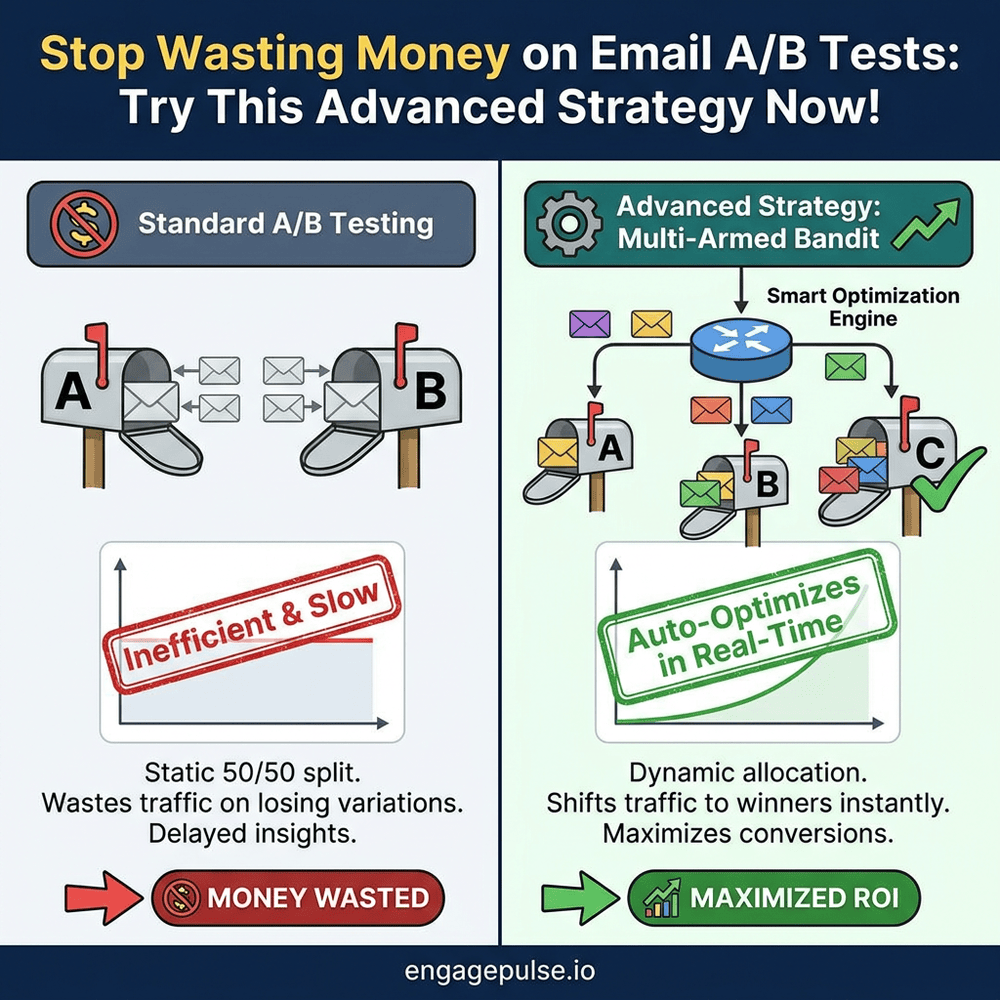
Unlocking the Power of Email A/B Testing: Why Your Current Approach Might Be Costing You
In the rapidly evolving landscape of marketing automation, A/B testing remains a cornerstone for optimizing email campaigns. However, recent insights reveal that many marketers rely on outdated or flawed testing methods, leading to misleading results and lost opportunities. This article explores how mastering advanced A/B testing techniques can significantly enhance ROI for enterprise organizations.
The Limitations of Traditional A/B Testing
Many businesses still trust simple, single-metric tests—comparing two subject lines or call-to-actions without considering other variables. While straightforward, this approach can be misleading due to statistical biases like false positives or negatives. For instance, a test might show a winner based on random chance rather than genuine preference, causing marketers to implement changes that don’t perform in real-world scenarios.
Understanding the Cost of Misleading Results
Relying on unreliable test outcomes can lead to increased customer churn, decreased engagement, and inefficient allocation of marketing resources. A poorly executed test might indicate a version that barely outperforms the control, prompting unnecessary redesigns or missed opportunities for higher engagement. This misjudgment can cost enterprise brands thousands in revenue and brand reputation over time.
Adopting Advanced Testing Methodologies
To mitigate these risks, marketers should incorporate robust statistical techniques such as multivariate testing and Bayesian models. These methods provide a deeper understanding of how different elements interact and help identify genuinely winning variations with higher confidence levels. Combining these with proper sample sizing and duration ensures more accurate insights.
Practical Application with Marketo, HubSpot, and Salesforce
Let’s consider Marketo’s smart campaign features, which support multi-variable testing and dynamic content personalization. By setting up multivariate tests within Marketo, you can simultaneously evaluate different subject lines, content blocks, and send times, then analyze the results using Bayesian inference. This process helps in making data-backed decisions that drive higher open and conversion rates.
Step-by-Step Tutorial: Optimizing Email Campaigns Using Marketo
- Create a new email program: Navigate to Marketing Activities > New > Email Program.
- Design Variations: Develop multiple versions of your email with different subject lines, headers, or CTAs.
- Set up multivariate test: Within the email program, select the “A/B/N Test” option and enqueue your variations.
- Determine sample size: Use Marketo’s built-in calculator or external tools to estimate sample size for statistical significance.
- Define goals and metrics: Choose open rates, click-throughs, conversions, or other KPIs for analysis.
- Run the campaign: Launch the test and monitor results in real-time, ensuring sufficient data collection.
- Analyze outcomes: Use Marketo’s reporting dashboards to identify the winning variation confidently.
- Implement the winner: Deploy the most effective email version across your larger audience to maximize engagement.
Conclusion
Effective email testing is crucial for enterprise marketers seeking measurable improvements in campaign performance. Moving beyond simple A/B tests to advanced, statistically sound methodologies can uncover true winners and reduce wasted effort. By leveraging tools like Marketo, businesses can confidently optimize their email strategies and realize higher ROI. Start integrating these techniques today for smarter marketing decisions.

Leave a Reply