

Unlocking the Power of Intent Data for Enterprise Marketing in 2026
As enterprise businesses seek more targeted and efficient marketing strategies, intent data has emerged as a game-changing asset. By leveraging sophisticated insights into prospects’ purchasing signals, companies can personalize campaigns and accelerate conversions. In this post, we explore the latest advancements in intent data and how these innovations elevate enterprise marketing operations.
Understanding the Evolution of Intent Data
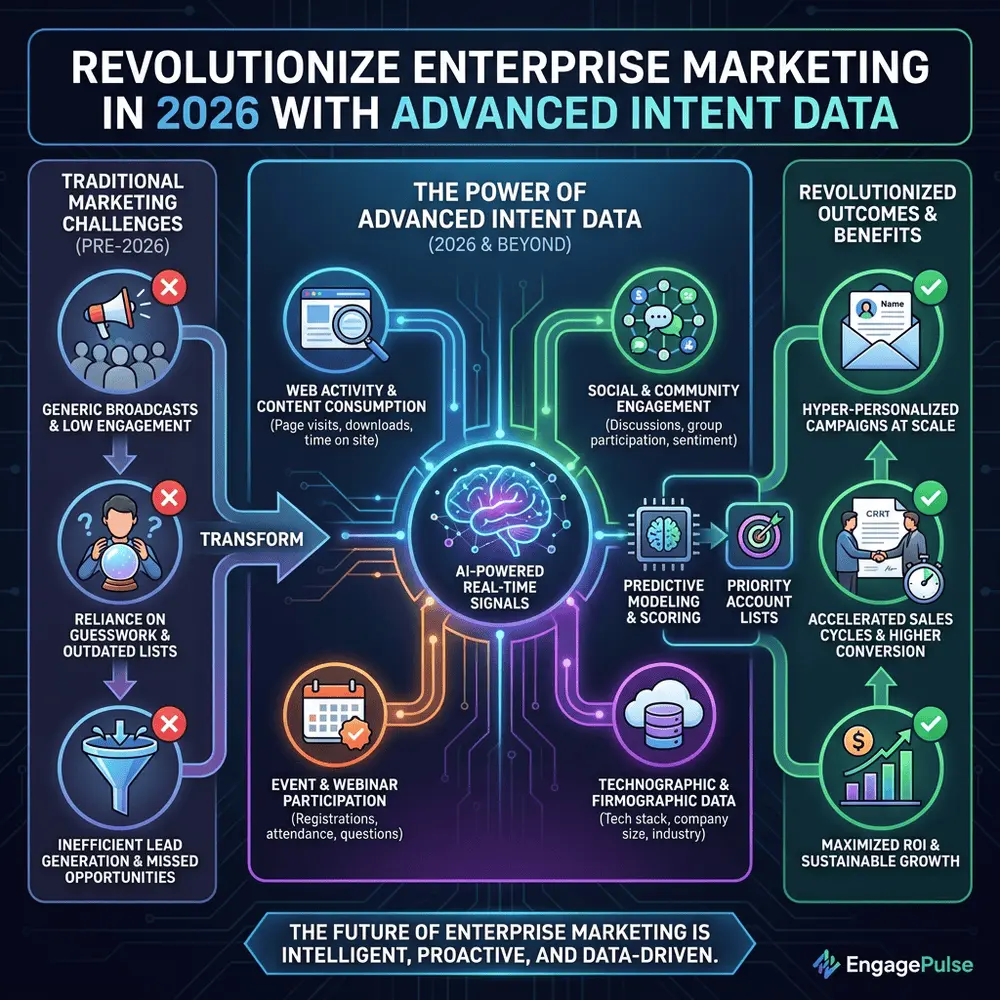
Intent data has transitioned from simple keyword tracking to a complex, multi-channel approach that captures behavioral signals across websites, social media, and third-party platforms. Recent updates in the intent data ecosystem emphasize richer, context-aware insights powered by AI and machine learning algorithms. These tools analyze vast amounts of data to identify companies and decision-makers with high purchase intent, enabling targeted outreach.
Why Enterprise Businesses Need Advanced Intent Data
For large organizations with complex buying processes, traditional marketing methods often fall short in identifying qualified leads early. Advanced intent data provides vital indicators—such as content consumption patterns, engagement times, and technology stack signals—that help marketers prioritize outreach efforts effectively. This targeted approach reduces wasted resources and shortens sales cycles significantly.
Platform Updates in 2026 and Their Impact
Leading martech platforms like Marketo, HubSpot, and Salesforce are progressively integrating intent data capabilities into their ecosystems. Recent updates include real-time intent signal integration, expanded third-party data sources, and enhanced personalization features. These enhancements empower marketers to craft more relevant, multi-touch campaigns that resonate with prospects’ current interests and behaviors.
Practical Application: Automating Lead Scoring with Intent Data in Salesforce
Let’s consider how an enterprise using Salesforce can leverage intent data for smarter lead qualification:
- Integrate intent data sources — connect third-party intent data providers (e.g., Bombora) into Salesforce via API integrations.
- Create custom scoring models — develop automation rules in Salesforce that assign scores based on intent signal levels, engagement patterns, and content interests.
- Automate lead nurturing — trigger personalized email campaigns or sales alerts when high-intent signals are detected.
This approach ensures teams focus on prospects demonstrating active buying signals, improving conversion rates and enhancing the customer journey.
Conclusion
Intent data’s evolution in 2026 offers enterprise marketing teams a competitive edge by enabling precise targeting and smarter engagement strategies. Integrating these insights within existing platforms like Salesforce and Marketo can significantly improve campaign performance and ROI. By adopting these advanced capabilities, enterprises can stay ahead in a rapidly changing digital landscape.

Leave a Reply