 (909) 474-2386
 Suwanee, GA

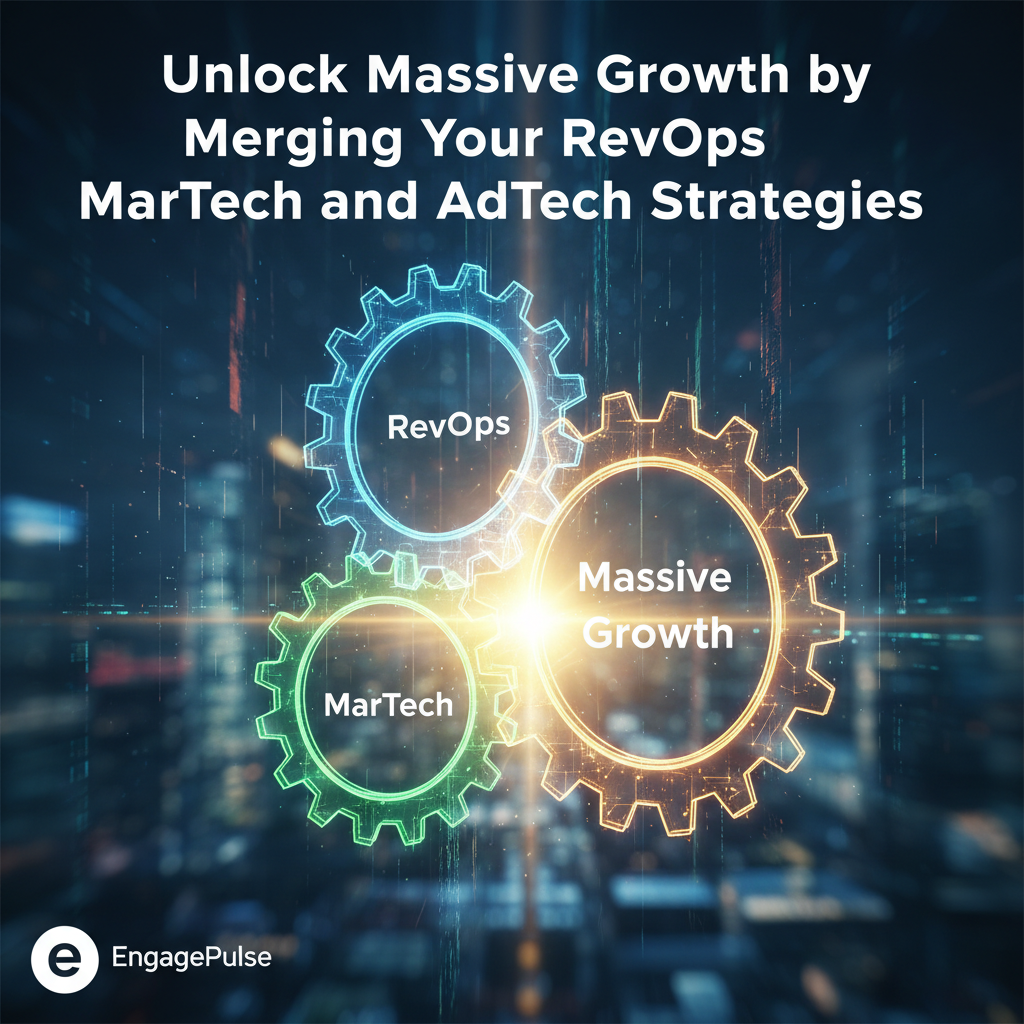
Adapting RevOps Strategies in the Era of Converging MarTech and AdTech
As marketing technology (MarTech) and advertising technology (AdTech) continue to converge, Revenue Operations (RevOps) teams face new challenges and opportunities. This integration demands a more synchronized approach to data management, audience targeting, and attribution. In this post, we’ll explore how enterprise businesses can adapt their RevOps strategies to harness the full potential of this convergence for measurable growth.
Understanding the Convergence of MarTech and AdTech
Historically, MarTech focused on customer engagement through CRM, email marketing, and content management, while AdTech centered on delivering targeted advertisements via programmatic buying and digital ad platforms. Recently, these domains have increasingly overlapped due to shared data sources, unified customer journeys, and advancements in AI-driven analytics.
This convergence allows enterprise companies to achieve a more holistic view of the customer, bridging the gap between marketing campaigns and advertising efforts. However, it also requires RevOps teams to adapt their processes, tools, and organizational structures to effectively leverage this integrated landscape.
Key Strategies for RevOps in a Converged Martech and AdTech Environment
- Centralize Data Management: Implement a unified data platform that consolidates information from both MarTech and AdTech sources. This enables accurate attribution, audience segmentation, and personalized outreach.
- Enhance Cross-Channel Attribution: Use advanced analytics to map customer journeys across channels, allowing for attribution models that reflect the influence of both marketing and advertising touchpoints.
- Leverage AI and Machine Learning: Deploy AI-driven tools to predict customer behavior, optimize ad spend, and personalize messaging based on integrated data insights.
- Align Organizational Objectives: Foster collaboration between marketing, sales, and ad teams to ensure unified goals and consistent messaging across channels.
Practical Example: Utilizing Salesforce for Unified Customer Insights
Suppose an enterprise company uses Salesforce as its central CRM platform. By integrating Salesforce with both MarTech and AdTech tools (such as Google Ads and Adobe Experience Cloud), RevOps can automate lead scoring based on advertising interactions and content engagement.
Step-by-step tutorial:
- Connect Salesforce with your AdTech platform via native integrations or middleware like MuleSoft.
- Sync advertising data with Salesforce Campaigns to track ad performance at the contact level.
- Use Salesforce Einstein AI to analyze integrated data, predict lead conversion likelihood, and prioritize sales efforts.
- Create dashboards to monitor the contribution of ad and marketing channels to revenue, enabling smarter budget allocation.
This approach provides enterprise teams with real-time insights, enabling more effective resource allocation and personalized customer engagement, ultimately driving growth.
Conclusion
As MarTech and AdTech continue to converge, RevOps teams must evolve to manage increasingly complex data landscapes. Centralizing data, leveraging AI, and fostering cross-department collaboration are critical for success. By adopting these strategies, enterprise businesses can unlock a unified view of the customer, leading to improved ROI and sustained growth.

Leave a Reply