 (909) 474-2386
 Suwanee, GA

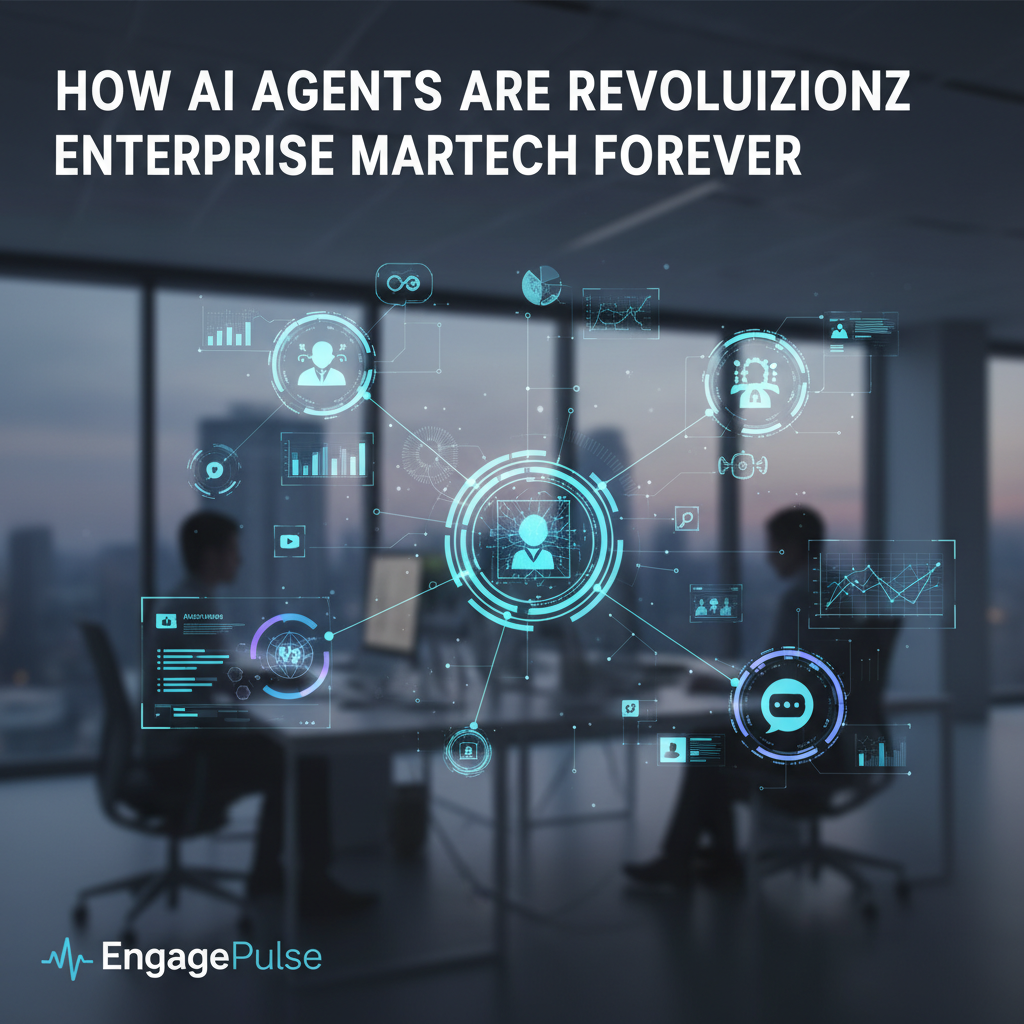
Harnessing AI Agents in MarTech: Transforming Enterprise Marketing Strategies
As enterprise marketing evolves, integrating artificial intelligence (AI) agents into Martech stacks is becoming essential for scalable personalization and automation. These advanced AI tools can revolutionize how businesses engage customers, optimize workflows, and deliver targeted campaigns. In this article, we explore how AI agents are reshaping Martech and how enterprises can leverage them effectively.
Understanding AI Agents in Martech
AI agents are autonomous, intelligent systems designed to perform specific marketing functions with minimal human intervention. They can analyze vast data sets, predict customer behaviors, and automate complex tasks such as lead scoring, content personalization, and campaign optimization. The integration of AI agents into existing platforms like Marketo, HubSpot, and Salesforce is democratizing enterprise marketing, making it smarter and more responsive.
The Architecture of AI Agents in the Martech Stack
According to recent insights from Martech.org, building effective AI-driven systems involves a layered architecture approach. This includes data ingestion, machine learning models, automation orchestration, and user interfaces. For enterprises, a well-architected AI stack ensures seamless integration with current CRM tools, enabling real-time decision-making and personalized customer journeys.
For instance, in Marketo, AI agents can analyze engagement data to automatically adjust lead nurturing workflows. In Salesforce, they can predict account churn, prompting proactive retention strategies. By designing an architecture that supports these capabilities, enterprises can unlock comprehensive automation and insights.
Practical Implementation Examples
A practical approach involves deploying AI agents to enhance customer segmentation. For example, an AI model can process behavioral data across multiple touchpoints to identify high-value segments. This enables targeted campaigns that improve conversion rates. Additionally, AI can automate content recommendations, delivering personalized experiences at scale.
Let’s consider a tutorial: integrating an AI-powered lead scoring model into HubSpot.
- Identify your data sources: past interactions, engagement levels, demographic info.
- Use HubSpot’s API to connect your data sources with a machine learning platform like AWS SageMaker.
- Train a lead scoring model using historical data to predict lead quality.
- Deploy the model and set up automation workflows in HubSpot to prioritize leads based on scores.
- Monitor and refine the model continuously for optimal performance.
This process enhances sales focus on high-probability leads, increasing efficiency and revenue.
Conclusion
Integrating AI agents into enterprise Martech stacks drives smarter automation, deeper insights, and personalized customer engagement. Proper architecture ensures these tools work seamlessly together, delivering measurable results. By adopting these technologies and following best practices, enterprise marketers can stay ahead of competition and create dynamic, scalable marketing strategies for sustained growth.

Leave a Reply