 (909) 474-2386
 Suwanee, GA

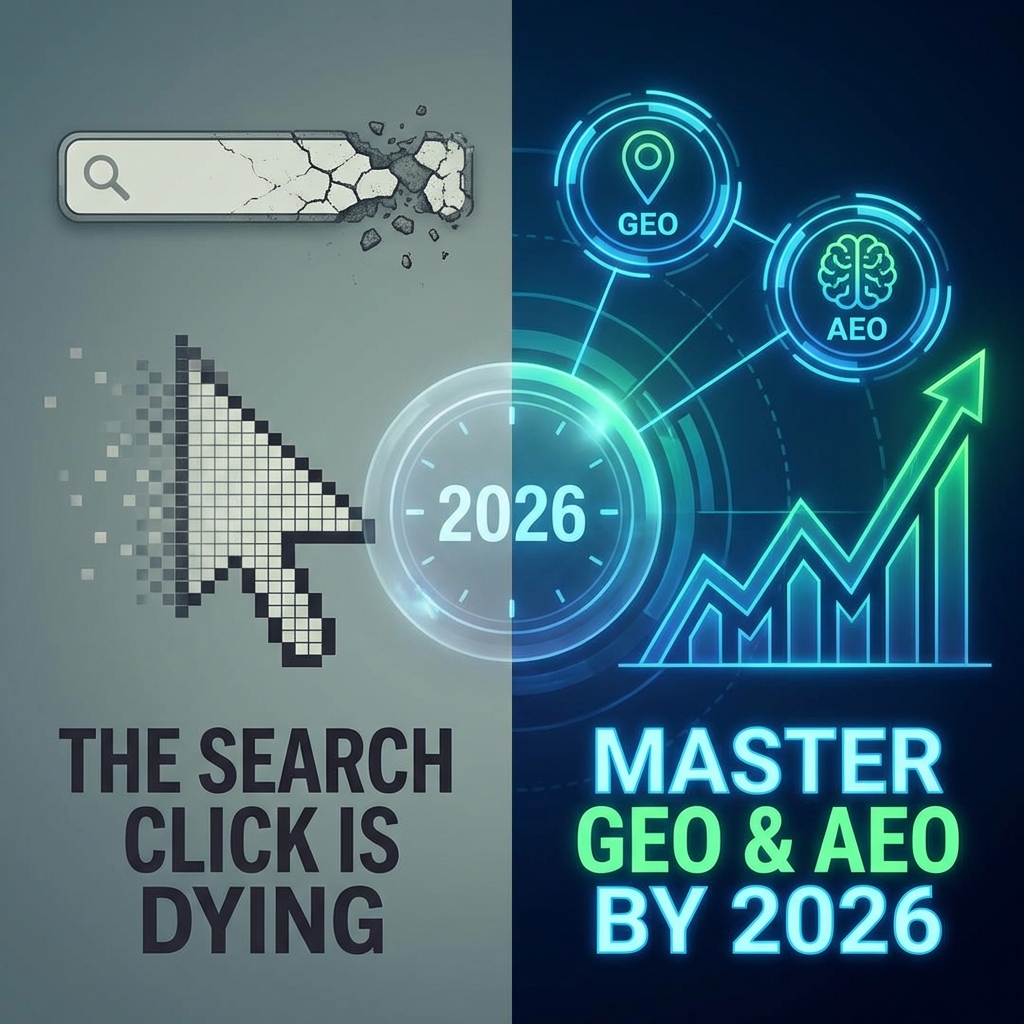
As search behavior shifts towards AI-driven interactions, businesses must adapt by mastering Answer Engine Optimization (AEO) and Generative Engine Optimization (GEO). AEO focuses on providing direct answers to user queries, while GEO emphasizes becoming a trusted source for AI systems. Companies that integrate both strategies will thrive in the evolving digital landscape, while those relying solely on traditional SEO will struggle to survive.
Google has once again transformed the digital landscape, and many business owners remain unaware of the impending changes. Starting in 2026, the way consumers discover businesses online is undergoing a fundamental shift. This evolution is not merely an extension of traditional SEO; it is about survival in an AI-first search environment. In this blog post, we will explore the critical concepts of Answer Engine Optimization (AEO) and Generative Engine Optimization (GEO) that businesses must master to thrive in this new era.
The Shift to AI-Driven Search
The traditional search click is on the decline. Google is testing features that allow users to engage in AI chat mode instead of being directed to external websites. This means that users can ask questions, receive answers, and engage in follow-up queries without ever clicking through to a business’s website. As a result, businesses that rely on search clicks for traffic are building their strategies on unstable ground.
The Era of Zero-Click Searches
We are entering an era dominated by zero-click searches. Tools like AI overviews, ChatGPT search, and perplexity provide answers directly within the search interface, eliminating the need for users to visit websites. Businesses that depend on traditional search clicks must adapt or risk being left behind.
Understanding AEO and GEO
To navigate this new landscape, businesses must understand two key concepts: AEO and GEO.
Answer Engine Optimization (AEO)
AEO focuses on creating content that appears as direct answers in search results. This includes featured snippets, voice search responses, and “people also ask” boxes. For example, if a user searches for “how much does X cost?” or “what’s the best Y for Z?”, AEO helps businesses become the immediate answer. This strategy is essential for gaining visibility in high-intent searches.
Generative Engine Optimization (GEO)
GEO represents the future of content strategy. It involves creating content that is so valuable and authoritative that AI models will cite, summarize, and reference it when generating answers. Instead of merely aiming for high rankings, businesses should strive to become trusted sources that AI systems rely on. When Google’s AI overview generates an answer or ChatGPT cites sources, that is GEO in action.
The Importance of Combining AEO and GEO
Many marketers mistakenly believe they must choose between AEO and GEO. However, the most effective strategy incorporates both. AEO provides quick visibility for specific questions, while GEO builds lasting authority as search becomes increasingly AI-generated.
Practical Examples of AEO and GEO
For instance, a B2B SaaS company can implement an AEO strategy by creating structured content that answers specific buyer questions, such as “What’s the ROI of X software?” or “How do I choose between platform A and B?” This involves using clear headers, concise answers, and FAQ schema markup to capture featured snippets.
In contrast, a GEO strategy would involve producing comprehensive guides that demonstrate genuine expertise, publishing original research, and including detailed author bios to establish credibility. By doing so, businesses position themselves as essential sources for AI-generated answers.
The Urgency of Adapting to Change
As we move into 2026, we are at a critical inflection point. Many businesses have yet to grasp the significance of these changes. There is a 12 to 18-month window for early adopters to dominate AI-generated search results. By late 2026, businesses that have not adapted will find themselves scrambling to catch up.
Tactical Playbook for AEO and GEO
To effectively implement AEO, businesses should:
- Write headers as direct questions that users are searching for.
- Provide concise answers in two to four sentences.
- Use bullet points and numbered lists for clarity.
- Add FAQ and how-to schema markup.
- Target keywords that are already showing featured snippets.
For GEO, businesses should:
- Create long-form content that thoroughly addresses complex topics.
- Include original insights, proprietary data, and expert quotes.
- Add clear author bios to showcase subject matter expertise.
- Cite reputable sources and regularly update content.
- Display last modified dates to indicate freshness.
Real-World Success Stories
Businesses that have already implemented these strategies are seeing significant results. For example, one consulting firm that adopted AEO for their service pages began capturing featured snippets for high-volume searches within just 30 days. They then developed GEO-optimized thought leadership content and, within 90 days, were being cited in AI-generated summaries across multiple platforms. Their organic visibility tripled without any increase in traditional rankings.
The Future of Search
Looking ahead, it is predicted that by the end of 2026, at least 40% of searches will result in zero clicks to external websites, with that number rising to 60% by 2027. Traditional SEO as we know it will become unrecognizable. The businesses that thrive will not be those with the most backlinks or highest domain authority, but those that AI systems trust and reference.
Taking Action Now
To prepare for this shift, businesses should conduct an audit of their highest traffic content. Identify which pieces can be optimized for AEO and which can be expanded into GEO powerhouses. Select three pieces for AEO optimization and three for GEO authority building, implement the changes, and track results separately to understand what works.
Conclusion
The search click is dying, but for those willing to adapt and embrace these changes, a new opportunity is emerging. The future will belong to first movers who are brave enough to experiment, learn, and build authority in the AI-driven landscape. This is not just another marketing tactic; it represents the most significant shift in how customers discover businesses since Google became a household name. The automation of search is here, and the AIfication of discovery is accelerating. The question is not whether your business will adapt, but whether you will do so in time to lead the way or be left behind.

Leave a Reply